

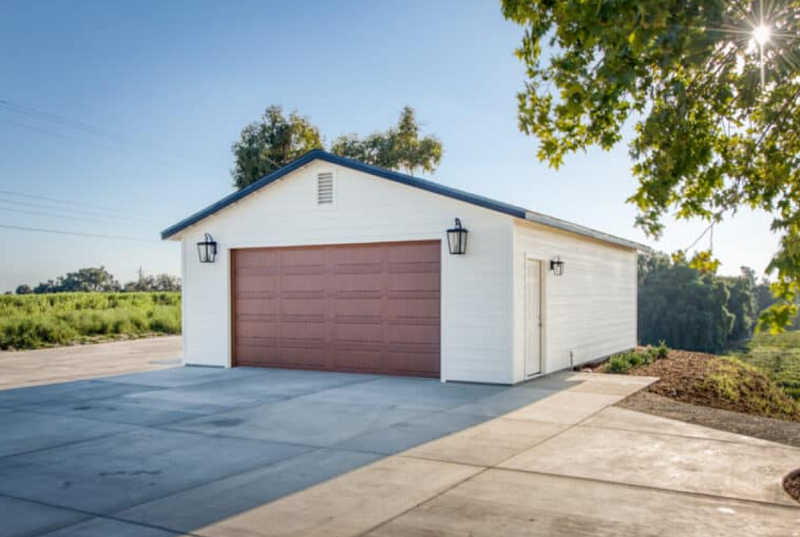
A single-car garage looks simple on paper: four walls, a roof, and a door. In the U.S., the paperwork is often the real project. Permits and zoning rules are what keep a “quick build” from turning into stop-work orders, neighbor complaints, or a resale headache.
Most towns treat a garage as an accessory structure, but the details change block-by-block: lot size, flood zones, historic districts, and even how close your driveway sits to an intersection. If you’re thinking about an a frame garage because you like the look or want a straightforward roofline, the same permit logic still applies — your local office cares less about the style and more about safety, setbacks, and drainage.
The good news is that once you understand what the city or county is checking, the process gets predictable. Here’s how to read the rules like a builder, not like a confused homeowner.
Permits first: what usually triggers one
In most jurisdictions, building a new garage requires a building permit. Some areas exempt very small sheds, but garages are rarely “no-permit” because they typically have a foundation, a large door opening, and often electrical work.
A permit is commonly required when you:
- Pour a new slab, footings, or any permanent foundation
- Build a structure that’s attached to the house or tied into existing framing
- Add electrical circuits, lighting, outlets, or an automatic door opener
- Run plumbing (even just a future stub-out) or add a heated/conditioned space
- Change grading, add significant impervious surface, or modify a curb cut/driveway apron
- Build in regulated areas (floodplain, coastal zones, wildfire interface, steep slopes)
If you’re replacing an existing garage, you might still need a permit depending on whether you’re altering size, height, structural elements, or location. “Repair” and “rebuild” are different words to many building departments.
Zoning basics that trip people up
Zoning answers “where and how big,” while the building code answers “how it’s built.” People often start with a floor plan and forget the zoning envelope, then discover the garage doesn’t fit on the lot legally.
Key zoning items to verify early include:
| Zoning item | What it controls | Why it matters |
|---|---|---|
| Setbacks | Minimum distance to property lines | Determines the maximum footprint and garage placement |
| Height limits | Maximum overall height or stories | Affects roof pitch, storage lofts, and taller doors |
| Lot coverage | % of lot covered by buildings | A larger garage may push you over the limit |
| Impervious surface | Driveways, slabs, patios | Can trigger stormwater requirements |
| Corner lot rules | Sight triangles and extra setbacks | Often stricter than interior lots |
| Easements | Utility/right-of-way areas | You usually can’t build in them |
Setbacks are not “suggestions”
Setbacks vary by zone and by whether the garage is attached or detached. Many towns also have a different setback for accessory structures than for the house. Even a small shift — moving the wall two feet — can be the difference between an easy approval and a variance hearing.
Also watch for “rear yard” rules. Some jurisdictions require a garage to be behind the front plane of the house, or they restrict where a driveway can connect.
Easements and drainage can override everything
Utility easements may not look like much on a survey, but they can wipe out your favorite garage spot. Drainage swales and stormwater paths matter too. A garage that blocks water flow can create flooding on a neighbor’s property, and cities take that seriously.
Attached vs detached: different rules, different inspections
An attached garage usually has more requirements than a detached one because it becomes part of the home’s fire and structural system. Common differences:
- Fire separation between garage and living space (walls/ceiling finishes, protected penetrations)
- Specific door requirements between garage and house (self-closing in some areas)
- More scrutiny of load transfer where new framing connects to the house
- Potential energy-code requirements if the garage is conditioned
A detached garage can be simpler, but it often has stricter setbacks and may be limited in height or size as an “accessory” building.
What to prepare before you apply
Walking into the permit office with “I want a 12×20 garage” is rarely enough. You’ll move faster if you show that you’ve already done the homework.
A typical submittal package includes:
- Site plan: property lines, existing buildings, proposed garage location, distances to lines, driveway, and utilities
- Basic plans: floor plan, elevations, and key dimensions (door opening sizes, wall heights, roof pitch)
- Foundation details: slab thickness, thickened edges/footings, rebar or mesh, and vapor barrier notes
- Framing info: wall studs, headers, roof framing, sheathing, and fastening schedule
- Wind/snow design notes: your local design loads (often handled by prescriptive code tables)
- Electrical plan (if applicable): panel info, circuit counts, outlet/lighting layout, and trench details for detached power
If you’re in an HOA, treat it like a second permit office. Get HOA approval in writing before you pay permit fees, because the city won’t help you if the HOA rejects the design later.
Common code requirements for a single-car garage
Even when a garage is “just storage,” it’s still a structure designed to resist wind, snow, and earthquakes (in some regions). The most common red flags on inspections are surprisingly basic.
Foundation and slab
Inspectors look for proper depth, reinforcement, and a stable base. In colder climates, footings often need to reach below frost depth. A slab poured too thin or on poorly compacted fill can crack and settle, which then makes the door and framing problems show up later.
Big door opening, big structural load
The wide garage door opening needs a correctly sized header and adequate bracing. This is where “looks fine” can fail an inspection. If you’re in a high-wind zone, the bracing and hardware around that opening can be very specific.
Fire safety where it meets the house
For attached garages, separation between garage and living space is a frequent requirement. That can include protected drywall layers on shared walls/ceilings, sealed penetrations, and proper detailing around ducts or wiring. Many areas also want carbon monoxide alarms in or near adjacent living spaces, even if the garage itself is unconditioned.
Electrical done like a real room
DIY electrical is a common permit killer. Garages typically need GFCI protection, proper box fill, correct conduit or cable protection, and safe trench depth for detached runs. Plan for lighting and outlets up front — adding them later can mean reopening walls or pulling a second permit.
How long it takes and how to avoid rejections
Timelines depend on how busy the department is and whether your project is “by the book.” A clean, code-prescriptive detached garage on a standard lot can move quickly. Anything involving a variance, a floodplain review, or complicated drainage will slow down.
To reduce back-and-forth:
- Start with the zoning desk before you finalize drawings
- Use a recent survey if you have one; if not, measure carefully and be honest
- Show setback dimensions clearly on the site plan (no guessing)
- Keep the first version simple: basic rectangle footprint, standard roof, standard door sizes
- Don’t hide electrical work; it will be obvious later and harder to fix
If the city flags setbacks or coverage, don’t argue from memory or “my neighbor did it.” Ask what section of the code or zoning ordinance they’re using, then adjust the plan.
When you might need a variance
A variance is permission to break a zoning rule, usually a setback or height limit. It’s not automatic, and it can take weeks or months depending on hearings and neighbor notices.
You’re more likely to need a variance if:
- The lot is unusually narrow, shallow, or irregular
- Existing structures already consume most of your buildable area
- You’re trying to place the garage closer to a street or side line on a corner lot
- You’re in a district with special design standards
If you suspect a variance is needed, design a “Plan B” that complies, so you’re not stuck if the request is denied.
Working with a designer without losing control
A good set of plans saves money because it prevents rework and reduces inspection failures. If you want a garage that matches your home, handles local loads, and stays within the zoning envelope, it helps to work with someone who designs garages every day — like the shed and garage design company «Storage Sheds And Garages».
Even if you do the building yourself, a professional plan set can clarify the structural details around the door opening, roof connections, and foundations, which are the spots inspectors focus on.
Quick checklist before you break ground
Use this as a final sanity check:
- You have written zoning confirmation on setbacks and maximum size
- Your site plan matches real property lines and shows all distances
- The permit covers foundation, framing, and electrical (if included)
- Utility locate is scheduled before any digging
- You’ve planned drainage so runoff doesn’t go to a neighbor
- Inspections are booked at the right stages (footing/slab, framing, electrical, final)
If you treat permits and zoning as part of the build — not a hurdle at the end — your single-car garage goes up faster, passes inspections with fewer surprises, and won’t become a problem when you sell the house.